
3D printing
3D Printing Processes
Our 3D printing service consists of six 3D printing technologies to transform your 3D files into plastic, metal, and elastomeric parts. In addition to a broad material selection, we offer several post-processing options to improve cosmetics or enhance mechanical properties.
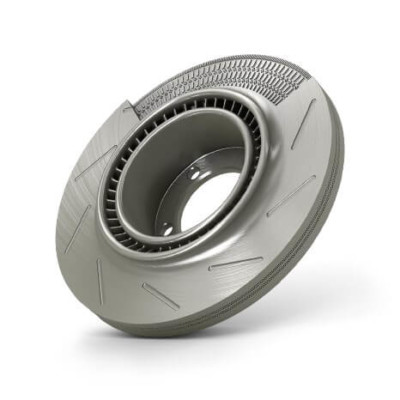
Metal 3D Printing
Direct Metal Laser Sintering (DMLS) uses a fibre laser system that draws atomized metal powder to the surface and welds the powder into fully dense metal parts.
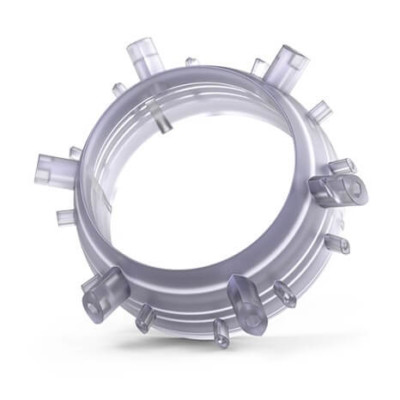
Stereolithography (SLA)
Stereolithography (SLA) uses an ultraviolet laser to form thousands of thin layers on the surface of a liquid thermoset resin until the final part is formed.
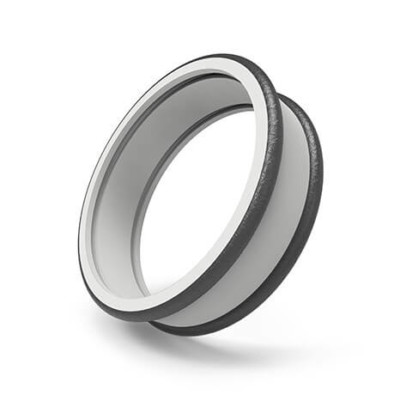
Poly jet
PolyJet employs a jetting process in which small droplets of liquid photopolymer are sprayed from multiple nozzles onto a build platform and cured into multiple layers to form elastic parts.

Carbon DLS
Carbon DLS produces plastic parts with excellent mechanical properties and surface finish by combining digital light projection, oxygen-permeable optics, and programmable liquid resins.
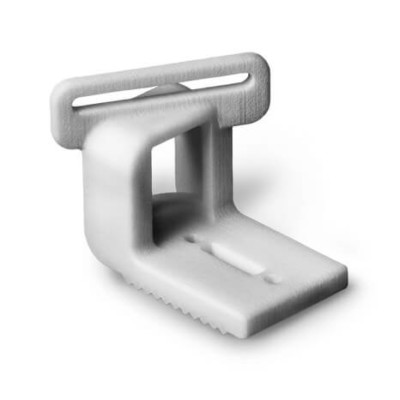
Selective Laser Sintering (SLS)
Selective Laser Sintering (SLS) uses a CO2 laser to fuse nylon-based powders, layer by layer until the final thermoplastic part is built.
Multi Jet Fusion (MJF)
Multi Jet Fusion selectively applies fusing and refining agents on a bed of nylon powder, using a heating element to fuse the nylon powder into a solid functional part.
3D Printing Material Avaialble
The aluminium alloy has a low density but relatively high strength and can be processed into a variety of shapes. Its plasticity is excellent and it can match or exceed that of high-quality steel. Comparatively to steel, it is widely used in industry because of its high electrical conductivity, thermal conductivity, and corrosion resistance.
Some aluminium alloys can obtain excellent mechanical properties, physical properties and corrosion resistance after heat treatment. Hard aluminium alloy belongs to the AI-Cu-Mg series, usually contains a small amount, and is enhanced by heat treatment. Hardness is high, but plasticity is poor.
In the super aluminium alloy Al-1-Al-Al-O system, heat treatment can strengthen the material. It is the highest strength aluminium alloy at room temperature, but it has poor corrosion resistance and softens quickly at high temperatures. Wrought aluminium alloy is mainly an alloy of aluminium-aluminium alloy. It has a variety of elements, less content, good thermoplasticity, and is suitable for forging.
Alloys derived from aluminium have excellent properties including processing, welding, corrosion resistance, toughness, high toughness, no deformation, easy polishing, no defects, and fantastic oxidation properties.
The material is moderately strong, has good corrosion resistance, is weldable, and has good process performance (easy to be extruded). Scope of application: building windows, curtain walls, industrial equipment, frame accessories, solar energy frames, etc.
AL6061, Al6063, AL6082, AL7075, AL5052, A380.
There are two types of brass: ordinary brass and special brass. Brass is highly plastic, corrosion-resistant, deformable, and castable, and has a substantial industrial application value. According to the different chemical compositions, brass can be divided into two categories: ordinary brass and special brass. The so-called ordinary brass is a binary alloy of copper and zinc.
The copper-zinc alloy can be divided into ordinary brass and special brass based on the elements added for better strength, corrosion resistance, and casting performance. The elements aluminium, iron, silicon, manganese, nickel, and others are added for better strength, corrosion resistance, and casting performance. Therefore, copper alloys composed of two or more elements are called special brass.
Ordinary brass is composed of copper and zinc. According to the difference in zinc content, it can be divided into single-phase brass and dual-phase brass, but the zinc content cannot exceed 45%, otherwise, the material will become brittle and cannot be used.
Special brass: Lead, tin, aluminium, and other alloying elements are frequently added to ordinary brass to create special brass. Lead brass, tin brass, and aluminium brass are the popular names for special brass. The purpose of adding alloying elements. Its main purpose is to increase tensile strength and improve processing performance.
HPb63, HPb62, HPb61, HPb59, H59, H68, H80, H90
Red copper is pure copper, also known as red copper. Due to its excellent electrical and thermal conductivity, copper is widely used in the electrical industry and precision processing industries. The biggest advantage and performance of copper is its good electrical conductivity, second only to silver, but the price of copper is much cheaper than silver. Red copper has become the most important part of the electrical industry.
High-purity copper is the primary condition for use in the electrical industry, and the purity must be higher than 99.95%. As long as a very small amount of impurities are mixed, the conductivity of the product copper will be greatly reduced, and the oxygen content of copper will also have a great influence on the conductivity. Impurities like phosphorus, arsenic, aluminium, lead, and antimony should be avoided in most cases. This kind of high-purity copper can only be obtained by electrolysis using original copper as the positive electrode, pure copper as the negative electrode, and sulfuric acid solution as the electrolyte. During the electrolysis process, the original copper on the positive electrode is melted and ionized, and pure copper ions are adsorbed on the negative electrode to obtain the pure copper we need.
Purposes of copper: wires, cables, brushes, EDM copper, generators, bus bars, switch cabinets, transformers, heat exchangers, pipelines, flat plate collectors for solar heating devices, etc.
C11000, c12000, c12000, c26000, c51000
Steel is an iron-carbon alloy. We usually call it steel. The carbon content of the material must not exceed 1.7% to ensure its toughness and shape. In addition to iron and carbon, other elements of steel include silicon, manganese, sulfur, and phosphorus. Other components will make the steel performance different.
Both steel and iron are iron-based iron-carbon alloys, but due to the difference in carbon content, the state and structure of iron-carbon alloys are also different at different temperatures. Iron has poor formability, is not easy to deform, and has poor weldability. These properties of steel are very good, especially when a certain amount of alloying elements are added to steel, there will be some special properties, such as high strength, resistance to wear, heat, corrosion, etc.
After ordinary steel is refined and other alloying elements are added, widely used steels with different properties can be produced, such as fatigue resistance, heat resistance, impact resistance, wear resistance, corrosion resistance, high polishing, etc. These high-quality steels are widely used in machinery parts, injection mold steel, stamping mold steel, aerospace, tools, automobiles, home appliances and other industries.
In order to improve the performance of steel, we usually use heat treatment, stress treatment, quenching and tempering treatment, surface coating and other methods.
SS303, SS304, SS316, SS416, low carbon steel, carbon steel, 4140, 4340, Q235, Q345B, 20#, 45#
Plastic is a polymer, and its main component is a synthetic resin. In addition, add some specific purpose additives as needed, such as plasticizers that can improve plasticity, anti-ageing agents that prevent plastics from ageing, and so on.
Polymers may have a large relative molecular weight, but their compositions are not complex and their structures follow certain rules. They are made by the polymerization of small molecules, such as polyethene plastics, which are made by the polymerization of ethylene molecules. When polyethene plastic is heated to a certain temperature range, it starts to soften until it melts into a flowing liquid. The melted polyethene plastic becomes solid after cooling and then melts into liquid after heating. This phenomenon is called thermoplasticity.
Polyethene, polyvinyl chloride and polypropylene are all thermoplastics. A thermosetting plastic, such as phenolic resin, will no longer be able to be softened and molded after processing, but it can be softened and molded when heated in the manufacturing process.
Plastic is a poor conductor of heat, which has the effect of silencing and damping. Plastic hardness, tensile strength, elongation and impact strength. Due to its small specific gravity and high strength, plastic has high specific strength.
Plastic parts are widely used in various fields of life, such as household appliances, instrumentation, wires and cables, construction equipment, communication electronics, automotive industry, aerospace, daily hardware, etc.
ABS, PC, PE, POM, Delrin, nylon, Teflon, PP, PEI, Peek, carbon fiber.
Our commonly used titanium alloys are composed of titanium, aluminium, tin, vanadium, and niobium, and different elements form different properties.
The main excellent characteristics of titanium are described as follows:
Low density and high specific strength: Titanium has a higher density than aluminium but is lower than steel, copper and nickel, but the strength is on top of the metal.
Good corrosion resistance and heat resistance. It is possible to use the titanium alloy at a temperature of 600°C for a long time.
Low-temperature resistance: Titanium alloys Ti-al-2, Ti- 2-o and Ti alloys are low-temperature titanium alloys, whose strength increases with decreasing temperature, but the plasticity changes little. In cryogenic environments, it exhibits good plasticity and toughness at temperatures as low as 196-253°C, avoids cold brittleness common in metals, and is an ideal material for storage tanks and containers.
The tensile strength is close to its yield strength: the titanium material has a higher yield strength ratio (tensile strength/yield strength) during the forming process, indicating that its plastic deformation is poor. As a result of titanium’s high modulus of elasticity compared to its yield limit, it has an incredibly flexible forming process.
Better heat transfer performance: Although the thermal conductivity of titanium is lower than that of carbon steel and copper because titanium has excellent corrosion resistance, the thickness can be greatly reduced, and the surface heat resistance and steam reduce the thermal resistance, so there is no junction on the surface. By reducing thermal resistance, fouling can significantly improve titanium’s heat transfer capabilities.
Alloys made from titanium have excellent physical properties that make them a preferred material in the aerospace, aviation, marine biomedicine, and automotive industries.
Ti 1 grade, Ti 2 grade.
It is a blend of polycarbonate and ABS. As a result, ABS can be made more heat resistant, impact-resistant, and have stronger tensile strength; on the other hand, polycarbonate can be made cheaper, with lower melt viscosity, improved processing, and less sensitivity to internal stress and impact strength. Today, polycarbonate/ABS alloys are available in many flame retardant, glass fibre reinforced, electroplated, and ultraviolet resistant formulations. Mainly used in the automotive industry, computers, copiers, electronic and electrical components, etc. PC/ABS alloy materials have been widely used in automotive decorative parts, lampshades, high-temperature electrical enclosures and other fields.
PC/ABS must be dried before processing. The humidity should be less than 0.04%. The recommended drying condition is 90mm 110℃, drying for 2h; the melting temperature should be around 23m ~ 300℃; the mold temperature should be 100℃ within 50 meters; the injection pressure depends on the plastic parts, and the injection speed has no special requirements. , But the higher the more appropriate.
Chemical and physical properties: ABS+PC has the comprehensive characteristics of PC and ABS, such as ABS is easy to process, and PC has excellent mechanical properties and thermal stability. The ratio of the two will affect the thermal stability of the ABS+PC material. The ABS+PC hybrid material also shows excellent flow characteristics. The shrinkage is about 0.5%. ABS+PC is a mixed synthetic modified engineering plastic. As for PC and ABS – acrylonitrile (A), butadiene (B) and phenylephrine (S) – they are polycarbonates. This modified plastic has better performance than simple PC and ABS. Such as improved impact resistance, heat resistance, hardness and so on.
PMMA acrylic plastic properties:
PMMA acrylic plastic is a hard and transparent material with a density of 1.19-1.22g/10cm³. The biggest feature of PMMA acrylic plastic is its high transparency and 92% light transmittance, which is the highest among plastics. The ultraviolet light transmittance is also as high as 75%.
PMMA acrylic plastic has good comprehensive mechanical properties. Its tensile strength, compressive strength, and flexural strength are higher than PE, PVC, PS, but its impact toughness is poor, so it is a hard and brittle material. PMMA has low heat resistance, the glass transition temperature of 104℃, melting temperature of 160-200℃, the thermal decomposition temperature of 270℃, easy to burn, the flame is blue when burning, the top is white, and it has a strong floral and fruity smell. And the smell of rotten vegetables.
PMMA has excellent dielectric and insulation properties, excellent arc resistance, and ageing resistance to atmospheric agents. PMMA is chemically stable and can withstand the dilution of inorganic acids, salts, and oils, but is not resistant to concentrated inorganic salts, Hot alkalis, ketones, chlorinated hydrocarbons, aromatic hydrocarbons, etc., will expand and break in alcohols, and have good corrosion resistance to ozone and sulfur dioxide gas.
PMMA acrylic plastic use: widely used in the manufacture of various optical glasses, such as lenses, prisms, mirrors, camera lenses, etc. And can make lamps, lighting equipment, instrument dials, dials, etc. In addition, it can also manufacture aircraft cabin glass, bulletproof glass, optical fibre, etc. In addition, adding fluorescent powder or pearl powder can make beautiful and beautiful products, which can be widely used in advertising decoration and handicraft production.
Polyvinyl chloride (polyvinyl chloride) is one of the most widely used plastics. Various additives are usually added to improve the performance of PVC materials, such as stabilizers, lubricants, processing aids, pigments, enhancers, etc.
PVC resin softens at a temperature close to that of its decomposition. It starts to decompose at 140°C, but decomposes faster at 170°C. In order to ensure the normal processing of PVC resin, the two most important process indicators are called decomposition temperature and thermal stability. The so-called decomposition temperature refers to the temperature at which a large amount of hydrogen chloride is released, and the so-called thermal stability refers to the time during which a large amount of hydrogen chloride is not released at a certain temperature (usually 190°C). PVC plastic will decompose for a long time at 100°C unless an alkaline stabilizer is added. If the temperature exceeds 180°C, it will quickly decompose.
PVC has the advantages of flame retardancy, high chemical resistance (resistant to concentrated hydrochloric acid, 90% sulfuric acid, 60% nitric acid, 20% sodium hydroxide), good mechanical strength, and electrical insulation.
A wide variety of PVC plastic materials are used for a variety of purposes, including PVC profiles, PVC pipe, PVC hard plates, PVC soft goods, PVC packaging materials, PVC walls and floors, PVC consumer goods, PVC transparent sheets, etc. PVC plastic materials, PVC plastic materials , PVC plastic materials: PVC profiles, PVC pipes, PVC hard materials and plates, PVC general soft products, PVC packaging materials, PVC wallboards and floors, PVC consumer goods, PVC transparent sheets, etc.
Process conditions of the injection mold. The drying temperature is 80°C within 2 hours, the material tube temperature is 160-190°C, the molding temperature is 30-60°C, and the molding shrinkage rate is 0.1-0.5%. The injection pressure can reach 1500bar, and the holding pressure can reach 1000bar. In order to avoid material degradation, an appropriate injection speed is required.
The main properties of POM are its hardness, high steel content, and wear resistance. POM is particularly suitable for making gears and bearings because of its low coefficient of friction and good geometric stability. The properties of POM make it appropriate for use in pipeline equipment (pipe valves, pump housings), lawn equipment, etc.
POM is a tough and elastic material with good creep properties, geometric stability and low-temperature impact resistance. Due to the high crystallinity of POM, the shrinkage rate is high, up to 2% ~ 3.5%. Different reinforcement materials have different shrinkage.
During homopolymerization of POM, the heat distortion temperature is 136°C, while during copolymerization, the heat distortion temperature is 110°C. Co-formaldehyde, however, has a higher continuous use temperature due to its different molecular structure. Generally speaking, the long-term use temperature of polyoxymethylene is about 100℃. UL specifies the long-term heat-resistant temperature of POM as 85-105°C. Mechanical properties: Since POM is a highly crystalline polymer, it has high elastic modulus, high hardness and rigidity. It can be used for a long time under the condition of -40 ~ 100℃. And it can withstand repeated shocks with little change in strength. Temperature and temperature changes do not greatly affect strength.
Injection molding conditions: POM does not need to be dried before injection molding. The melting temperature range is 190-220°C. By increasing the holding pressure during injection molding, the pressure drop can be reduced. The material will decompose at a high melting temperature. The screw speed should be appropriate, not too high, and the residue should be reduced; the appropriate mold temperature is (80mm 100℃), and the product demoulding temperature is relatively high, so pay attention to the protection work when disassembling the parts. POM should be processed under the conditions of medium injection pressure, medium injection speed, low material temperature and high mold temperature.
This engineering plastic consists of an aryl, ketone and ether chain bond and is a high molecular polymer. It has many properties such as high-temperature resistance, strong flame retardancy, and good chemical stability, so it is often used in construction machinery and aerospace products.
PEEK plastic has the advantages of strong heat resistance and high-temperature resistance. The positive high-temperature resistance of PEEK plastic is 260°C, and the heat distortion temperature is 160°C. If 30% glass fibre is added for modification, the heat distortion temperature can be increased to 280-300℃.
PEEK plastic has excellent electrochemical properties. Even in the high-frequency range, the dielectric index and dielectric loss of 10HZ plastic are very small. Under the PVA environment, the dielectric loss is only 0.02, while the dielectric point constant is only 3.2.
It has excellent chemical stability and can withstand acids and alkalis. Almost any chemical reagent except concentrated sulfuric acid still maintains good stability at high temperatures.
It has excellent hydrolysis resistance and can be used for a long time even in a steam environment at 200-250°C.
In addition, PEEK plastic also has excellent flame retardancy, melt fluidity, thermal stability, corrosion, high strength and easy formability.
PEEK plastic is widely used in the chemical industry, electronic equipment, automobile industry, aerospace and other fields because of its excellent high-temperature resistance, heat resistance, high height and processability.
This material is formally known as polyphenylene sulfide. It is famous for its thermal stability and is widely used in special engineering plastics after filling and modification.
PPS is a special high engineering plastic with excellent properties such as high-temperature resistance, flame retardant, corrosion resistance, weather resistance, dimensional stability, and excellent electrical properties. The transformed PPS is widely used as special engineering plastics, mainly in the fields of electronics and electrical appliances, such as transformer skeletons, high-frequency coil skeletons, plugs, sockets, contactor drum plates, junction frames, and different kinds of precision parts.
Heat resistance is PPS plastic: the heat distortion temperature exceeds 260℃, which is one of the highest temperatures of thermoplastic engineering plastics. The long-term use temperature is 220-240℃, and the short-term temperature can reach 260℃.
Inorganic acids, alkalis, and salts do not dissolve PPS plastic below 200°C. At present, no solvent can dissolve PPS below this temperature.
When exposed to high temperatures, high humidity, and high frequency, PPS plastic exhibits high surface resistivity, low breakdown voltage, low dielectric constant, and dielectric loss tangent, making it an excellent insulation material. After modification, it can also be made into a high-strength material with good electrical conductivity.
PPS plastic mechanical properties: strong rigidity, high surface hardness, excellent creep resistance and good fatigue resistance.
Injection conditions: The material is dried at 130-150°C for 3 hours, the barrel temperature is 280-330°C, 40%GF+PPS 300mm, 350°C, the mold temperature is 120-180°C, the injection pressure is 50-130V MPA, and the injection speed is medium.
Finishing Methods
Polishing is the process of grinding and modifying the surface of parts using various tools and media. The function of polishing is to make the surface of the part smoother, but it cannot improve the geometric shape and dimensional accuracy of the part. Technically speaking, polishing refers to the use of abrasives and machinery to make the surface of parts smooth, while using machinery to apply abrasives to the surface of loose parts is a more active process, which will make the surface finish smoother and brighter.
Polishing on mechanical parts is generally divided into three steps:
The first step: After the processes of knife scar, grinding, CNC, spark machine, wire cutting, etc., the surface is generally rough, so we need to polish the surface of the part with oilstone.
Step 2: After the oilstone operation, the sandpaper operation is performed. When the sandpaper operation, pay attention to the round edges, sharp corners, rounded corners, and orange peel of the parts.
The third step: We mainly use diamond grinding paste, and the accuracy requires Ra0.2, which requires a clean polishing room.
The processed surface is the surface effect of the workpiece obtained by directly processing the workpiece with various machines and equipment without any post-processing. With the improvement of modern machinery accuracy, the surface quality of the workpiece is getting better and better. Although the processing line can be seen on the surface of the workpiece, it is actually very smooth, and the general processing surface quality can reach Ra3.2.
Anodizing is divided into ordinary anodizing and hard anodizing.
The conversion film formed in the process of metal anodization is wear-resistant, corrosion-resistant, and other functional or decorative properties on the metal surface in the electrolytic solution electrochemical treatment, and the treated part is used as the positive and negative corrosion-resistant materials.
The object of anodizing treatment can be aluminum and aluminum alloy, magnesium alloy, titanium and titanium alloy, etc. The anodic oxidation of aluminum and aluminum alloys is widely used in the market and is developing rapidly.
The main function of anodizing is to improve the hardness, wear resistance, corrosion resistance and surface coloring of the workpiece, and to protect and beautify the surface of the workpiece.
Steel is an iron-carbon alloy. We usually call it steel. The carbon content of the material must not exceed 1.7% to ensure its toughness and shape. In addition to iron and carbon, other elements of steel include silicon, manganese, sulfur, and phosphorus. Other components will make the steel performance different.
Both steel and iron are iron-based iron-carbon alloys, but due to the difference in carbon content, the state and structure of iron-carbon alloys are also different at different temperatures. Iron has poor formability, is not easy to deform, and has poor weldability. These properties of steel are very good, especially when a certain amount of alloying elements are added to steel, there will be some special properties, such as high strength, resistance to wear, heat, corrosion, etc.
After ordinary steel is refined and other alloying elements are added, widely used steels with different properties can be produced, such as fatigue resistance, heat resistance, impact resistance, wear resistance, corrosion resistance, high polishing, etc. These high-quality steels are widely used in machinery parts, injection mold steel, stamping mold steel, aerospace, tools, automobiles, home appliances and other industries.
In order to improve the performance of steel, we usually use heat treatment, stress treatment, quenching and tempering treatment, surface coating and other methods.
SS303, SS304, SS316, SS416, low carbon steel, carbon steel, 4140, 4340, Q235, Q345B, 20#, 45#
Sandblasting is a kind of high-pressure air as the power to spray abrasives into the workpiece that needs surface treatment at a high speed, thereby changing the post-treatment process of the surface of the workpiece. Due to the impact and cutting action of the abrasive on the surface of the workpiece, the working surface will get different roughness, which improves the mechanical properties of the working surface and improves the fatigue durability of the workpiece. Due to the influence of abrasives, very small pores are generated on the working surface, thereby increasing the adhesion between the workpiece and the coating and prolonging the service life of the coating.
The main functions of sandblasting are as follows:
In order to remove oil and rust, sandblasting can remove rust and other dirt on the surface of the workpiece, forming a certain rough surface on the surface of the workpiece, thereby improving the adhesion of the plastic powder and the paint film.
For processed workpieces, burrs on the surface can be removed by sandblasting to make the workpiece more beautiful.
For castings or heat-treated parts, sandblasting can remove oil and scale on the surface, improve the surface finish, and make the workpiece more beautiful.
Powder coating electrostatic spraying is to use static electricity to adsorb the powder coating on the working surface, and the powder is baked at high temperature to form a solid coating on the surface of the part.
Electrostatic powder spraying must first have an electrostatic generator to generate DC high voltage, a spray gun, a power supply system, and a powder recovery system to spray and atomize the powder. The workpiece to be sprayed should be grounded to the positive electrode, and the negative high voltage generated by the discharge needle gun connected to the powder outlet of the spray gun will generate corona discharge through the discharge needle. At this time, the negatively charged powder particles reach the surface of the workpiece under the action of static electricity and compressed air flow.
Due to the attraction of electrostatic force, the powder is uniformly adsorbed on the surface of the workpiece for a period of time without falling off. The workpiece enters the curing furnace, leveled, consolidated, and controlled humidity or time, and finally a tight, uniform, smooth and dense coating is combined with a firm workpiece. .
Powder spraying makes the surface of the product smooth, and the coating has strong acid resistance, alkali resistance, impact resistance and abrasion resistance. And can withstand strong ultraviolet radiation and acid rain for a long time, and the coating has no powdering, discoloration, falling off and other phenomena.
Black oxidation is an oxidation treatment on the surface of steel, mainly suitable for carbon steel and low alloy steel.
The black oxide heats the workpiece in a solution of concentrated alkali and oxidant (heating temperature is about 550°C), forming a dense oxide film (fe3-fe3) on the surface of the steel. The iron oxide film can isolate the air, prevent the internal steel from oxidizing, and achieve the purpose of corrosion resistance.
The steel is oxidized to form a protective oxide film with magnetic iron oxide (fe-fe2o3) as the main component. Its color is generally black or blue-black, and cast steel and silicon steel are brown. The oxidation treatment methods include alkali oxidation, alkali oxidation, acid oxidation and so on. It is often used for the protection and decoration of machinery, precision instruments, weapons and daily necessities.
Whether iron oxide can be oxidized with dense and smooth iron oxide, it is very important to choose a strong oxidizer. The strong oxidant is composed of sodium hydroxide, sodium nitrite and sodium hydroxide phosphate. When the color is blue, the steel part is treated with its molten liquid; when the steel part is treated with an aqueous solution, the steel part is black.
Surface drawing is a surface treatment method that forms lines on the surface of the workpiece by polishing the product and has a decorative effect.
The surface drawing process is to use drawing materials to make a decorative surface of metal stainless steel aluminum surface, and the surface drawing process is also a surface treatment method. It can make the surface clearly show every tiny silk mark, so as to make the metal frosted surface a fine brushed gloss product. Because wire drawing surface treatment can make the surface of the material show different textures and make the product more beautiful, wire drawing processing is becoming more and more popular nowadays.
There is no uniform classification and name for wire drawing. Usually divided into straight wire and wire according to the surface effect. Straight wire is also called silk thread; while silk thread is called snow pattern.
Electroplating is the use of electrolyte to electroplate other types of metals on the workpiece. Use electrolysis to attach the surface of the part to the metal film to prevent metal oxidation (corrosion), improve wear resistance, electrical conductivity, anti-reflection, corrosion resistance (such as copper sulfate), and improve aesthetics.
Electroplating metal or other insoluble materials, anodizing the workpiece, and cathode coating metal cations, form a coating surface on the surface of the workpiece. In order to eliminate the interference of other cations and make the electroplating uniform and firm, the electroplating solution should be used as the electroplating solution containing electroplating metal cations to keep the concentration of metal cations unchanged.
